
Potty training can feel overwhelming for any parent—but when your child has additional needs, it can feel even more uncertain.
If you’ve tried to start and it didn’t go as planned…
If your child seems resistant, anxious, or confused…
Or if you’re simply unsure where to begin…
You’re not alone.
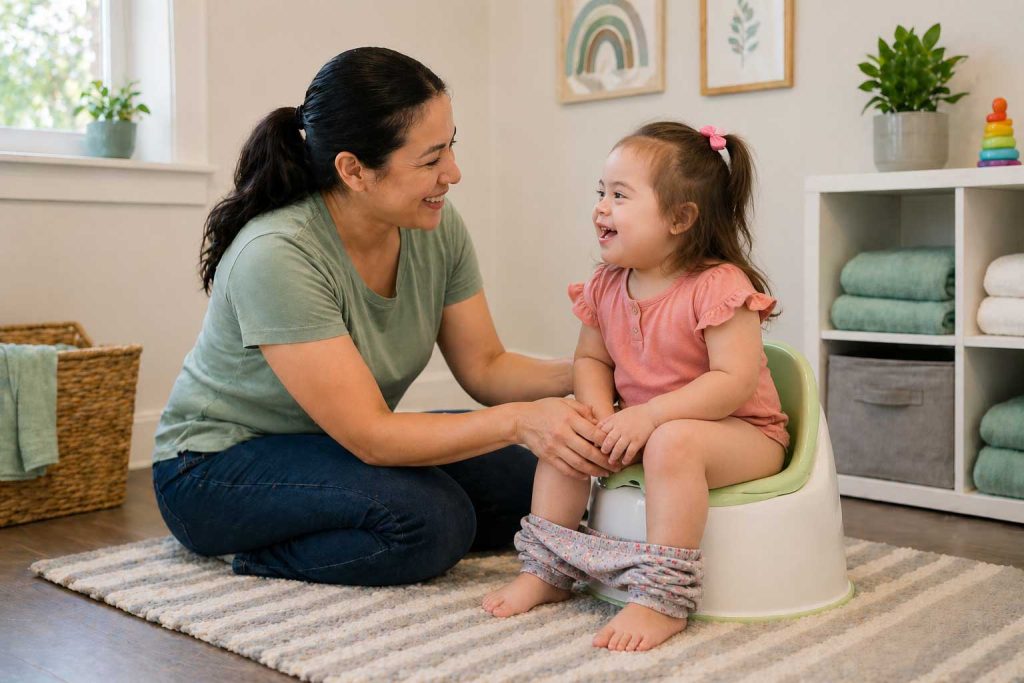
Potty training for children with special needs often requires a different approach—one that is more flexible, more patient, and tailored to your child’s unique way of learning.
The good news is: progress is possible—with the right support and a calm, thoughtful plan.
Why Potty Training Can Be Different for Children with Special Needs
Children with developmental differences, sensory sensitivities, or communication challenges may experience potty training in a different way.
This can include children with:
- Autism spectrum differences
- Developmental delays
- Sensory processing sensitivities
- Speech or communication differences
- Physical or coordination challenges
For these children, potty training isn’t just about learning a routine—it may involve:
- Understanding body signals
- Feeling comfortable in the bathroom environment
- Processing new sensations
- Communicating needs effectively
Because of this, traditional “one-size-fits-all” methods often don’t work—and can sometimes create frustration for both you and your child.
Start with Readiness (Not Pressure)
One of the most important steps is recognizing that readiness may look different.
Instead of focusing only on age, look for signs like:
- Awareness of wet or soiled diapers
- Interest in the bathroom or routines
- Ability to sit (even briefly) with support
- Beginning communication about needs (verbal or non-verbal)
Your child doesn’t need to meet every sign—but noticing progress in these areas can help guide your timing.
If readiness isn’t there yet, pushing forward can lead to resistance. Waiting and supporting development often leads to smoother progress later.
Create a Calm, Predictable Routine
Children with special needs often respond best to consistency and predictability.
Try:
- Using the potty at the same times each day
- Keeping the environment calm and uncluttered
- Following a simple, repeatable routine
When your child knows what to expect, it reduces anxiety and builds confidence.
Even small routines—like walking to the bathroom together or washing hands afterward—can create a sense of familiarity and comfort.
Make the Bathroom a Comfortable Space
For some children, the bathroom itself can be overwhelming.
Consider:
- Bright lights
- Loud flushing sounds
- Cold toilet seats
- Echoes or unfamiliar surroundings
You can help by:
- Keeping lighting soft if possible
- Letting your child leave before flushing if needed
- Using a child seat insert for stability
- Offering calm reassurance without pressure
The goal is to make the environment feel safe—not stressful.
Support Communication in a Way That Works for Your Child
Communication doesn’t have to be verbal to be effective.
Your child might communicate using:
- Words
- Gestures
- Visual cues
- Behavior changes
You can support this by:
- Watching for patterns (like pacing or hiding)
- Using consistent, simple language
- Introducing visual supports if helpful
Over time, your child will begin to connect their body signals with the routine.
Go at Your Child’s Pace
Progress may look different—and that’s okay.
For some children:
- Sitting on the potty comfortably is a big first step
- Understanding the routine may take time
- Accidents may continue longer than expected
Instead of focusing on speed, focus on:
- Comfort
- Confidence
- Small, steady progress
When your child feels safe and supported, learning happens more naturally.
How to Handle Resistance or Setbacks
Resistance is common—and it doesn’t mean failure.
If your child:
- Refuses the potty
- Becomes upset during attempts
- Regresses after progress
It’s often a sign to:
- Reduce pressure
- Simplify your approach
- Take a short break if needed
Potty training is not a straight line. Pauses and adjustments are part of the process.
Work with Caregivers and Support Systems
If your child attends childcare, therapy, or school, coordination is key.
Try to:
- Share your approach with caregivers
- Keep routines as consistent as possible
- Communicate about progress and challenges
Even partial consistency can help your child feel more secure across environments.
When Extra Support Can Help
Sometimes, having guidance tailored to your child makes a big difference.
Support can help you:
- Understand your child’s readiness more clearly
- Adjust your approach based on their needs
- Reduce frustration and guesswork
- Create a realistic, step-by-step plan
Every child is different—and having a plan that fits your child can make the process feel much more manageable.
A Gentle Path Forward
Potty training for children with special needs may take more time, patience, and flexibility—but it doesn’t have to be overwhelming.
With the right approach, your child can learn in a way that feels:
- Safe
- Supported
- Respectful of who they are
Progress might be slower—but it can also be more meaningful and lasting.
Looking for a plan that fits your child’s unique needs?
Get calm, personalized guidance designed to support your child’s development and help you move forward with confidence.
Book a consultation to get a clear, practical plan tailored to your child.