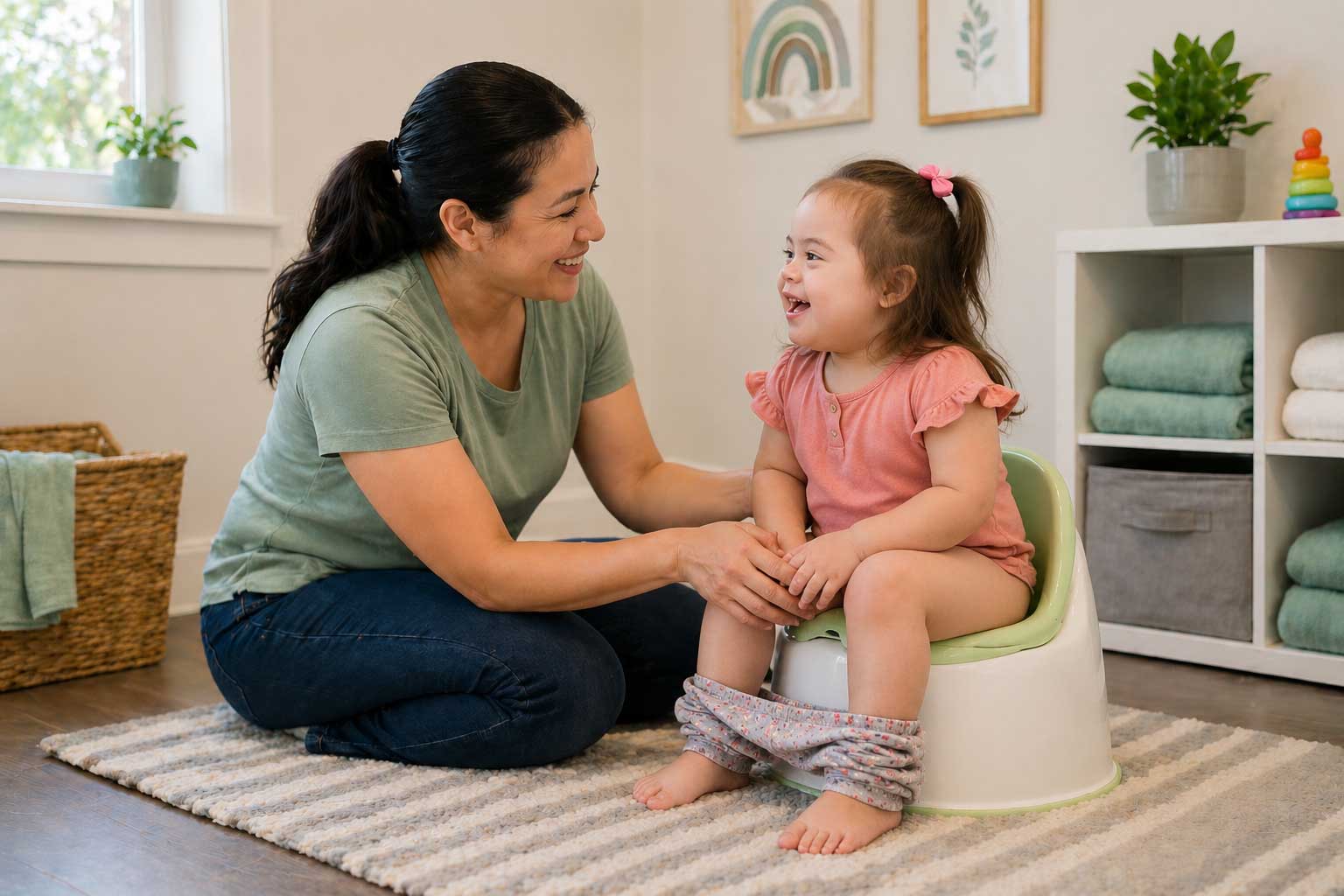


Potty training at home can feel challenging on its own—but when your child is also in childcare or daycare, it can feel even more complicated.
Different environments, different routines, and different expectations can make consistency difficult. And when consistency breaks down, potty training often does too.
The good news? You can successfully potty train while your child is in childcare—with the right approach and communication.
Why Potty Training in Daycare Can Be Challenging
Many parents run into setbacks when trying to potty train a child who attends daycare or childcare.
Common challenges include:
- Different routines at home and daycare
- Varying expectations between caregivers
- Less one-on-one attention in group settings
- Children feeling unsure in a new environment
- Accidents increasing due to inconsistency
Even small differences—like when your child is prompted to use the potty—can impact progress.
That’s why coordination matters so much.
The Key to Success: Consistency Between Home and Childcare
If there’s one thing that makes the biggest difference, it’s this:
Your child needs a consistent approach across both environments.
When expectations, language, and routines are aligned:
- Your child feels more confident
- They know what to expect
- Progress happens faster
When things are inconsistent:
- Confusion increases
- Resistance can develop
- Accidents become more frequent
Think of potty training as a shared effort—not something happening in two separate places.
Step 1: Talk to Your Childcare Provider Early
Before you fully begin potty training, have a conversation with your childcare provider.
Ask questions like:
- Do you support potty training at daycare?
- How often do children get bathroom breaks?
- How do you handle accidents?
- What do you need from us to support this process?
This helps you understand their system—and where you may need to align your approach.
Step 2: Create a Simple, Shared Plan
You don’t need anything complicated. In fact, simple works best.
Agree on basics like:
- How often your child is prompted to use the potty
- What language you’ll both use (e.g., “Let’s try the potty”)
- How accidents are handled
- Whether your child wears underwear or pull-ups
The goal is to reduce differences, not create perfection.
Step 3: Use the Same Language and Expectations
Children learn faster when they hear the same cues everywhere.
Try to keep things consistent, such as:
- Using the same words (“potty,” “bathroom,” etc.)
- Encouraging in the same tone (calm, not pressured)
- Responding to accidents in a similar way
This helps your child feel secure and understand what’s expected—no matter where they are.
Step 4: Prepare for a Different Environment
Childcare settings are busy, social, and sometimes overwhelming.
Your child may:
- Be distracted by other children
- Forget to go to the bathroom
- Feel hesitant using a different toilet
- Have more accidents at daycare than at home
This is completely normal.
It doesn’t mean potty training isn’t working—it just means your child is adjusting.
Step 5: Expect Some Setbacks (and Stay Calm)
Even if things are going well at home, you may see:
- More accidents at daycare
- Slower progress during the week
- Better results at home than in childcare
This doesn’t mean you need to start over.
Stay consistent, keep communication open, and give your child time to adjust to both environments.
Step 6: Choose the Right Timing
If possible, try to start potty training during a time when:
- Your schedule is stable
- There are no major transitions (new classroom, move, etc.)
- You can focus on building a routine at home first
Some families find success starting potty training over a long weekend or break, then coordinating with childcare afterward.
What If Daycare Has Different Rules?
Some childcare centers have specific policies, like:
- Requiring pull-ups
- Only allowing scheduled potty breaks
- Waiting until a child shows certain readiness signs
If this happens:
- Work within their system as much as possible
- Focus on consistency at home
- Communicate clearly about your goals
Even if things aren’t perfectly aligned, progress is still possible.
Signs Your Child Is Managing Both Environments Well
As things start to come together, you’ll likely notice:
- Fewer accidents across settings
- Your child communicating when they need to go
- More confidence using different bathrooms
- Less resistance overall
These are strong signs that your approach is working—even if it’s not perfect yet.
When to Adjust Your Approach
If potty training in daycare isn’t going well, it may be time to adjust.
You might need to:
- Simplify your plan
- Reduce pressure
- Improve communication with caregivers
- Revisit your child’s readiness
Sometimes small changes make a big difference.
You Don’t Have to Navigate This Alone
Potty training with childcare adds a layer of complexity—but it’s absolutely manageable with the right support.
If you’re feeling stuck, unsure how to coordinate with your daycare, or dealing with setbacks, getting guidance can help you:
- Create a clear plan that works in both environments
- Reduce stress for you and your child
- Move forward with confidence
A Smoother, More Confident Process
Potty training doesn’t have to fall apart just because your child is in daycare.
With consistency, communication, and a calm approach, your child can learn to use the potty successfully—both at home and in childcare.
And when everything starts working together, the process becomes much smoother for everyone involved.
Need help coordinating potty training with your childcare provider?
Get personalized guidance tailored to your child’s routine, environment, and needs.
Book a consultation and get a clear plan that works at home and in childcare.